Religious mosaic art — Mary Magdalene, John 8:7
“Let the one of you that is sinless be the first to throw a stone at her.”
About this piece
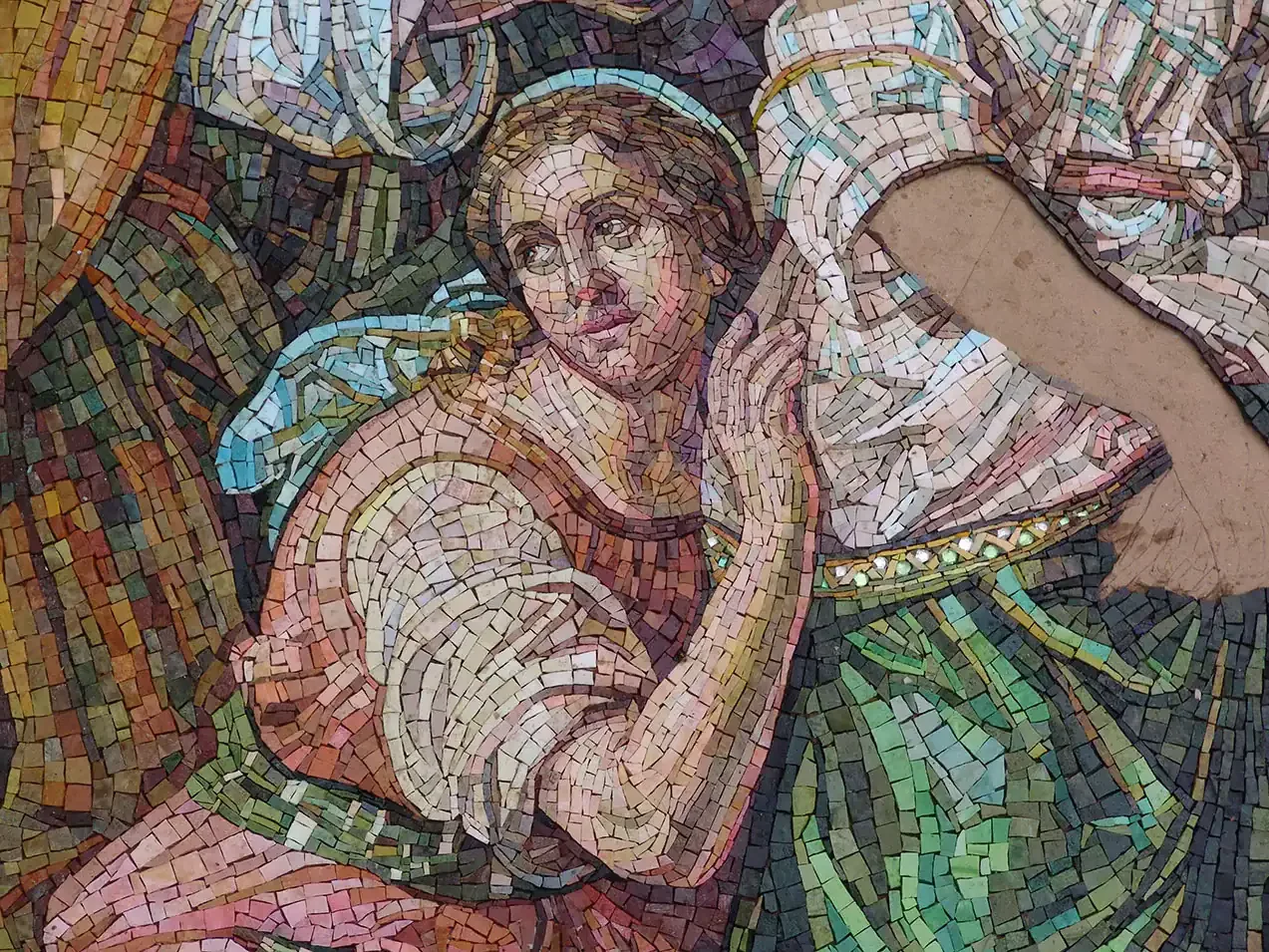
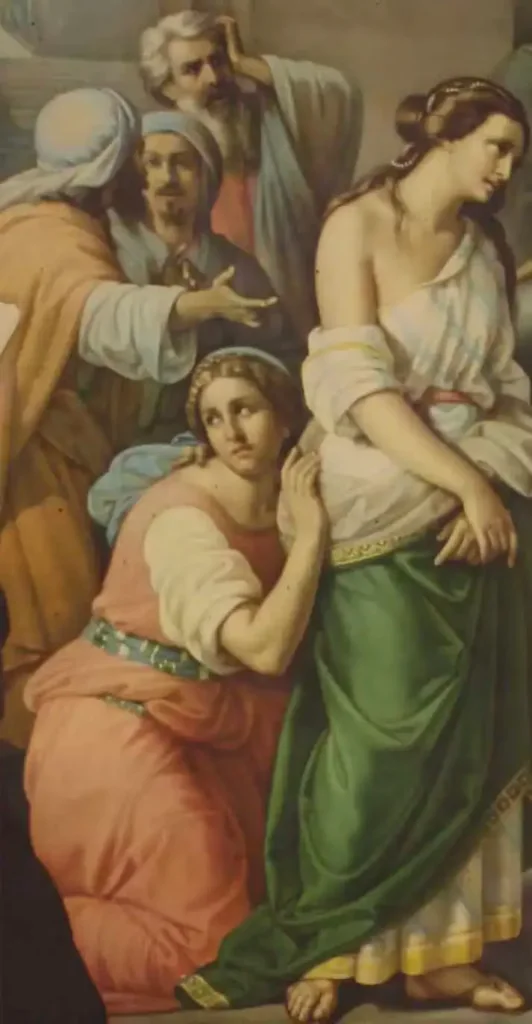
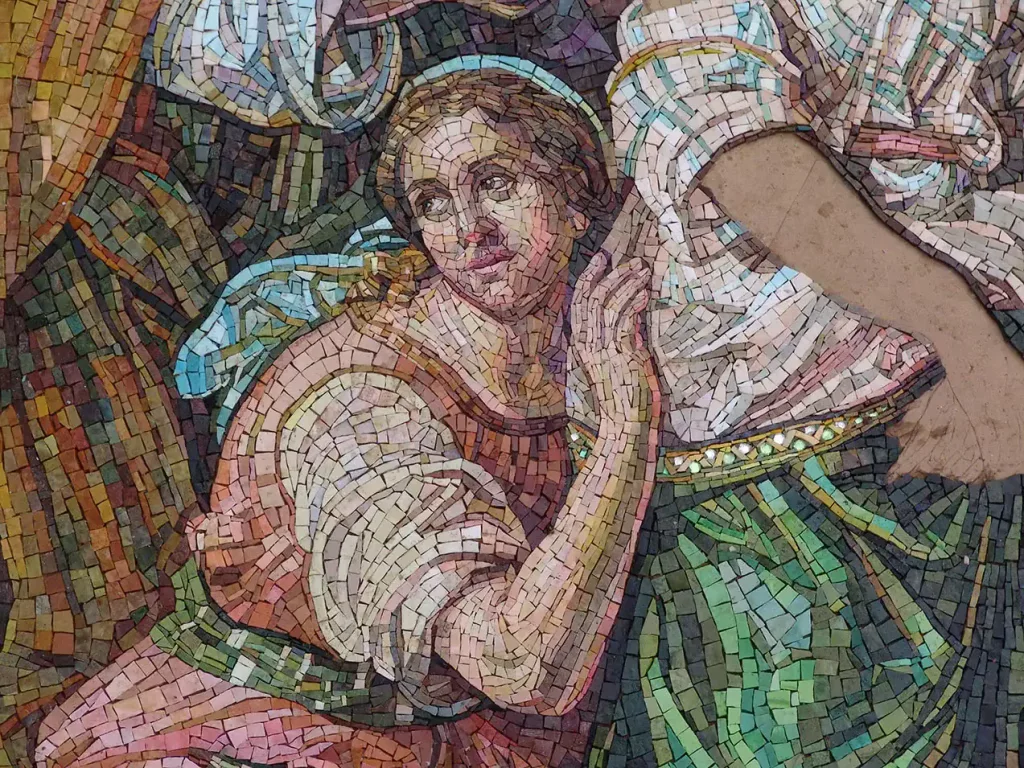
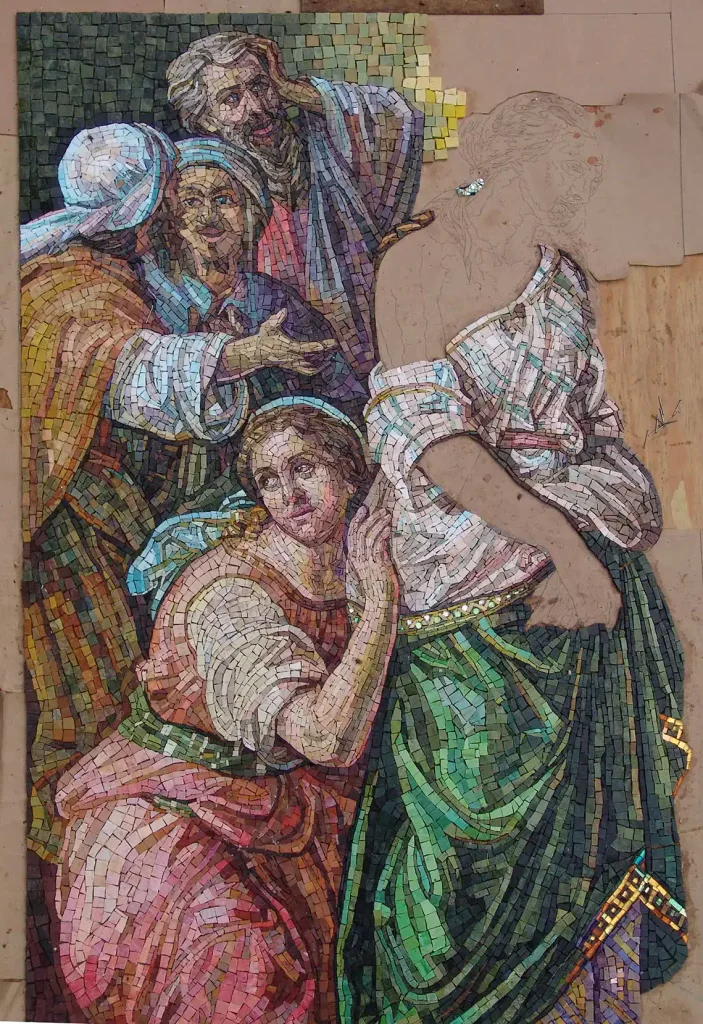
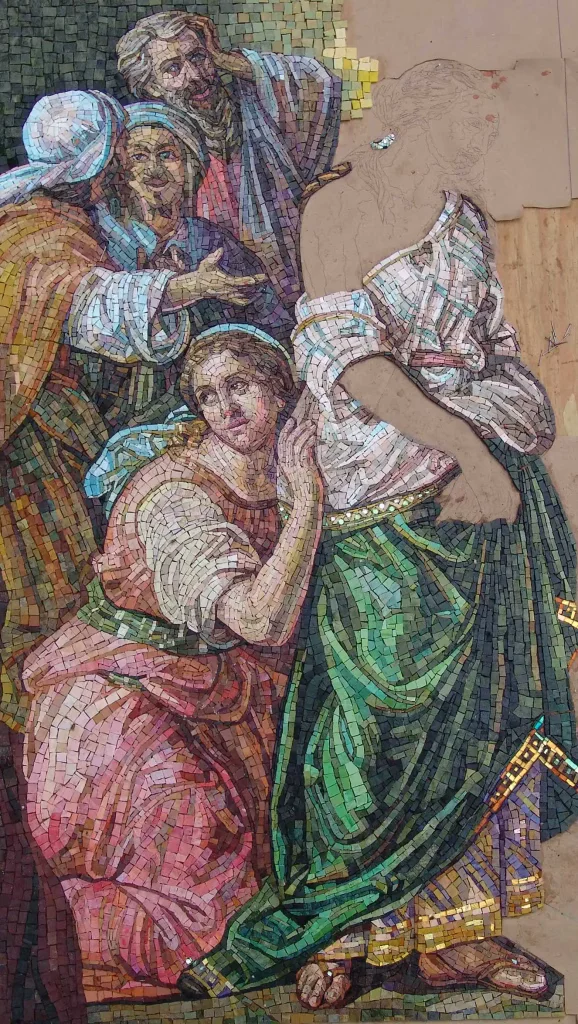
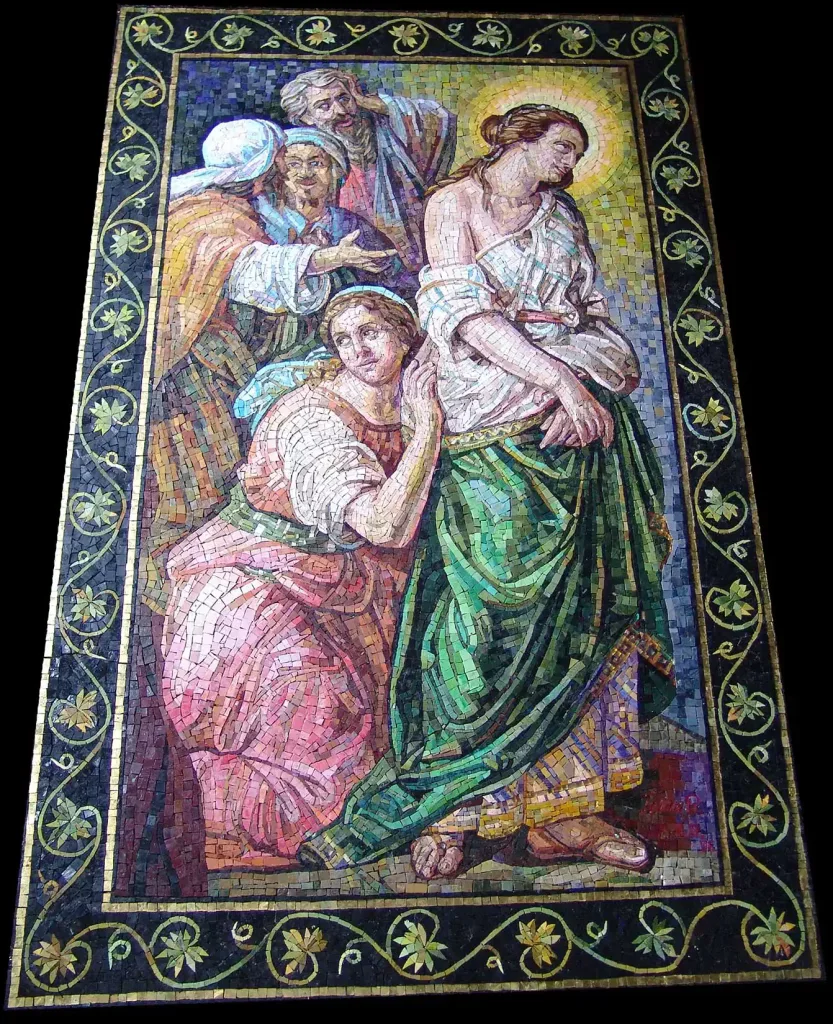
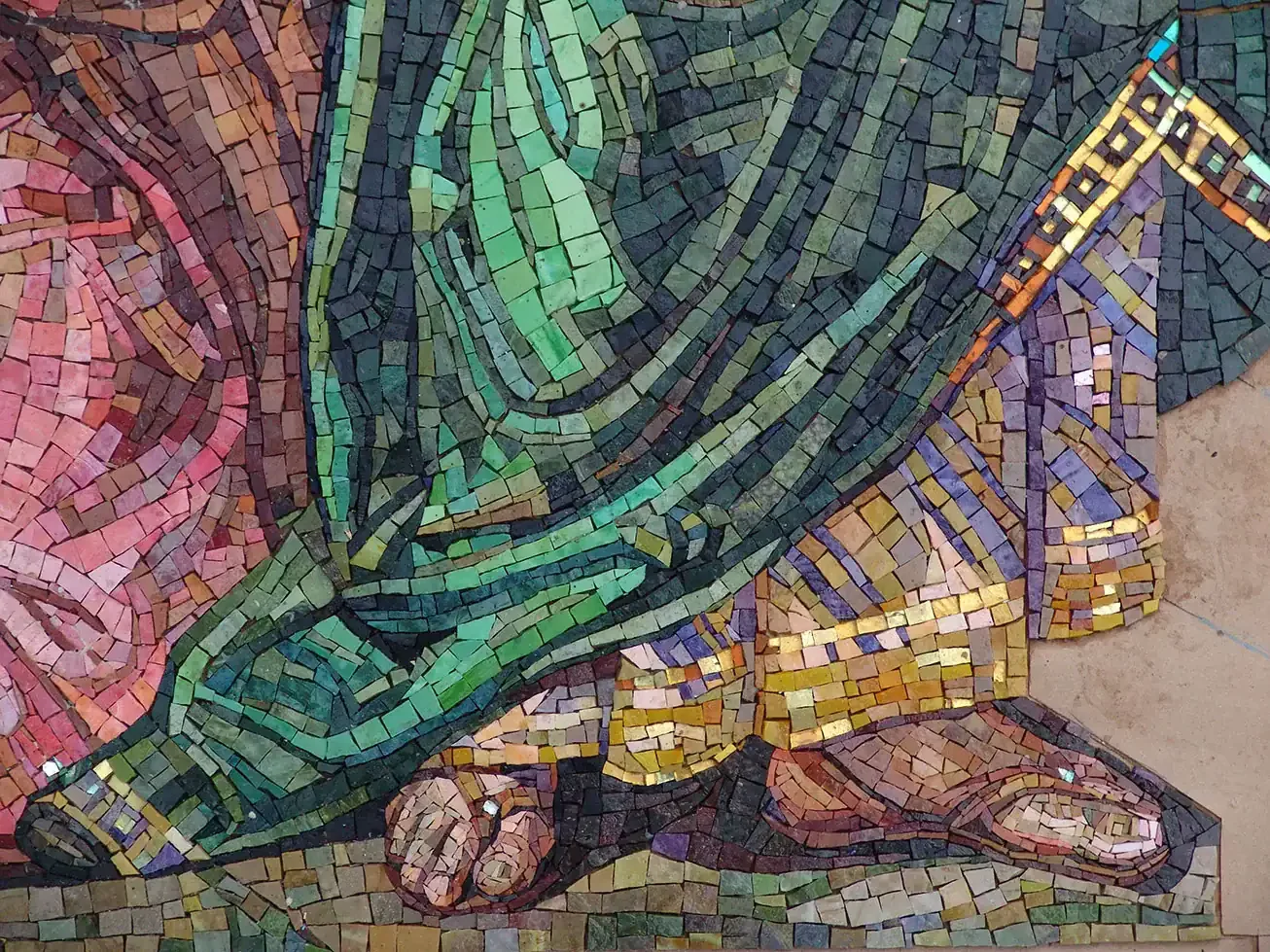
This mosaic shows Mary Magdalene in the scene described in John 8:7, after the 1824 painting by Juan Cordero. It was hand-cut in Mexican smalti glass for a private client.
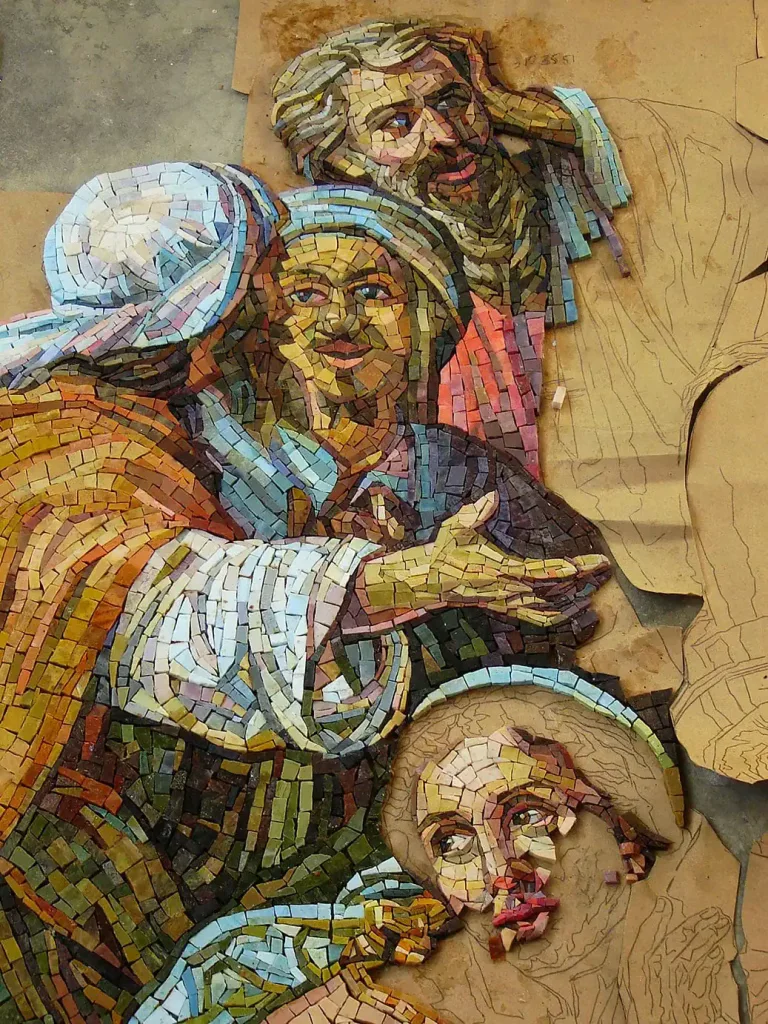
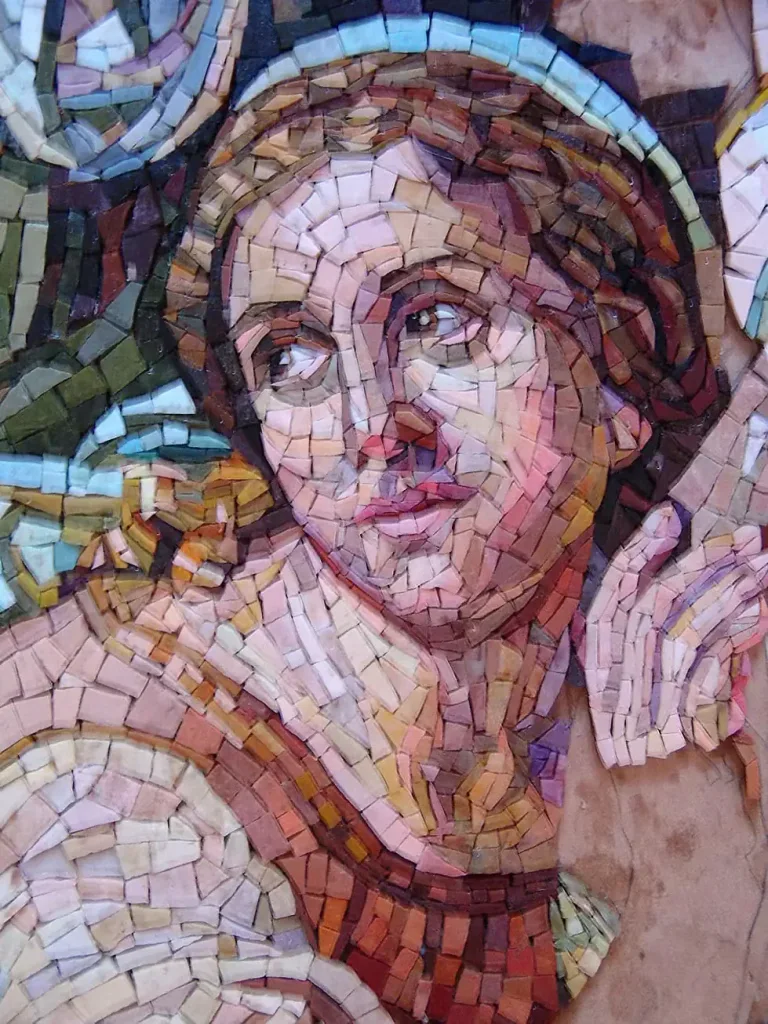
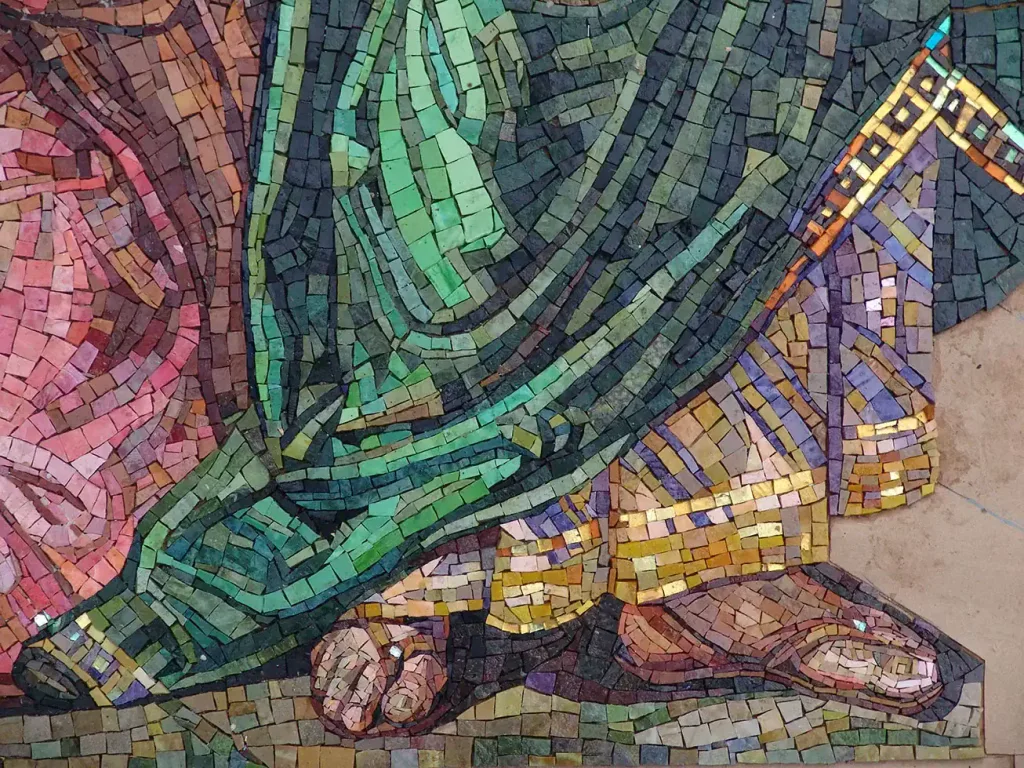
Figurative work is the hardest thing to do in glass. Faces, drapery and close-range tonal blending have to be built from irregular hand-cut pieces, with every shift in tone carried by the glass itself rather than by paint — a single face can take dozens of tones.
How it was made

Working from the reference
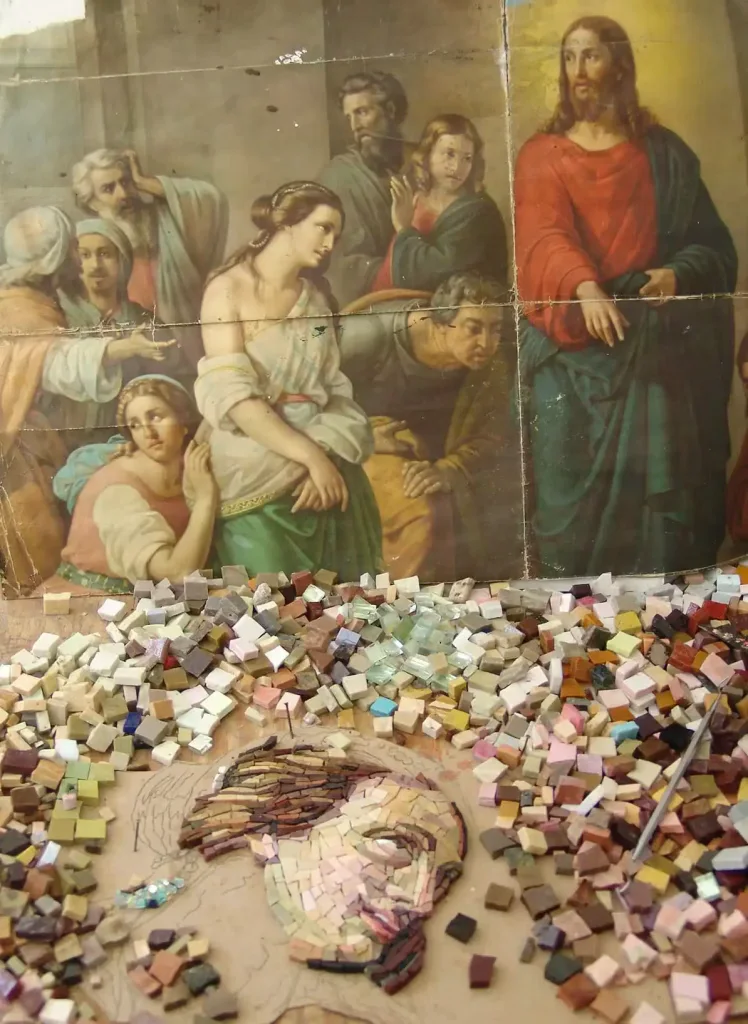
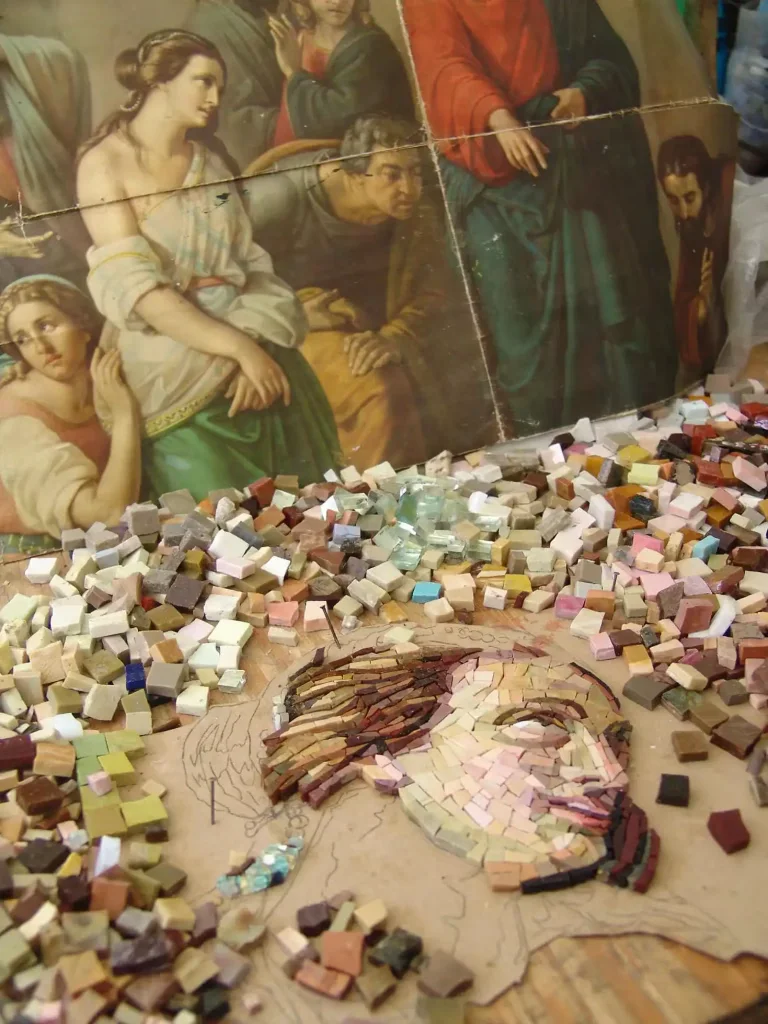
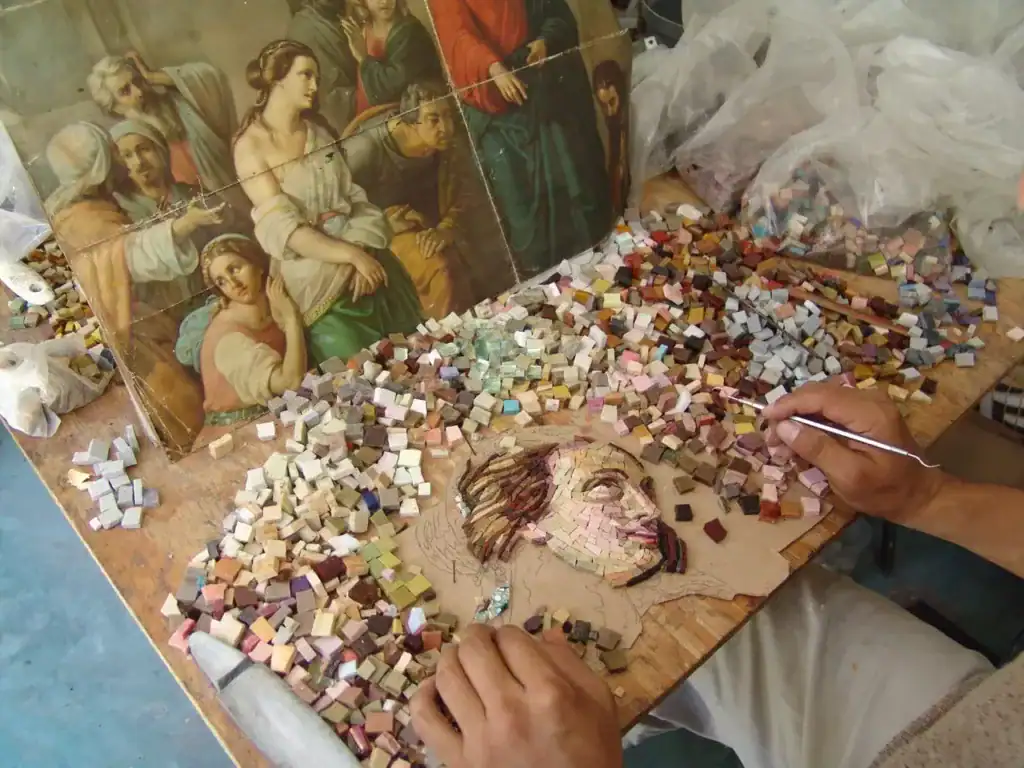
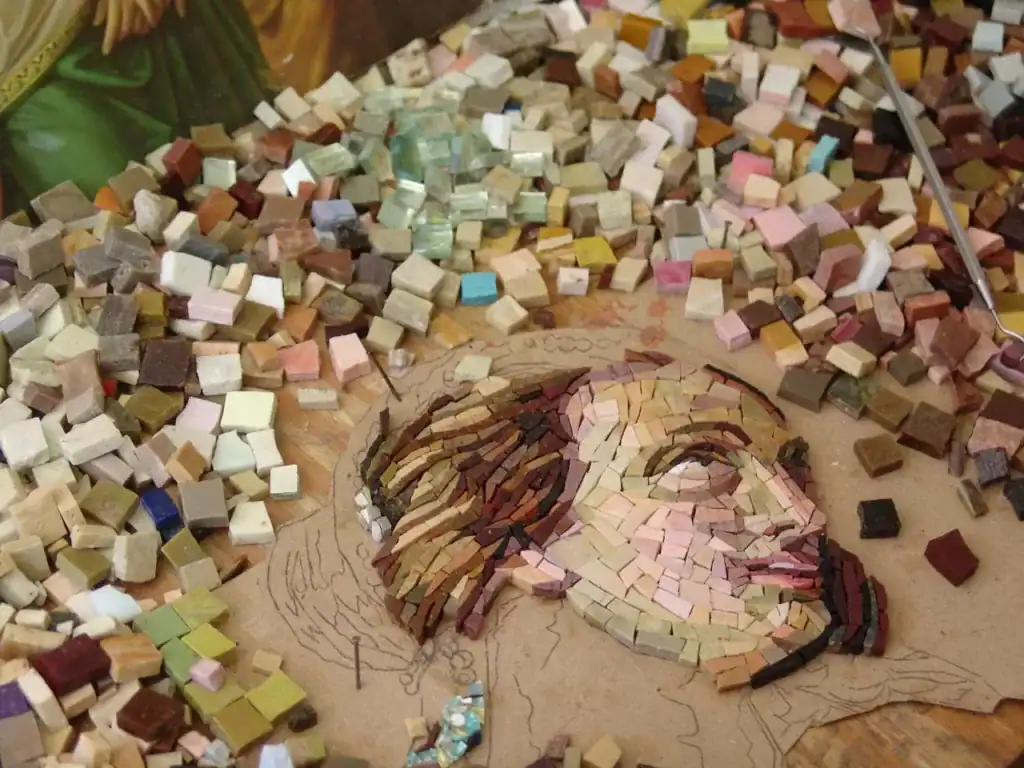
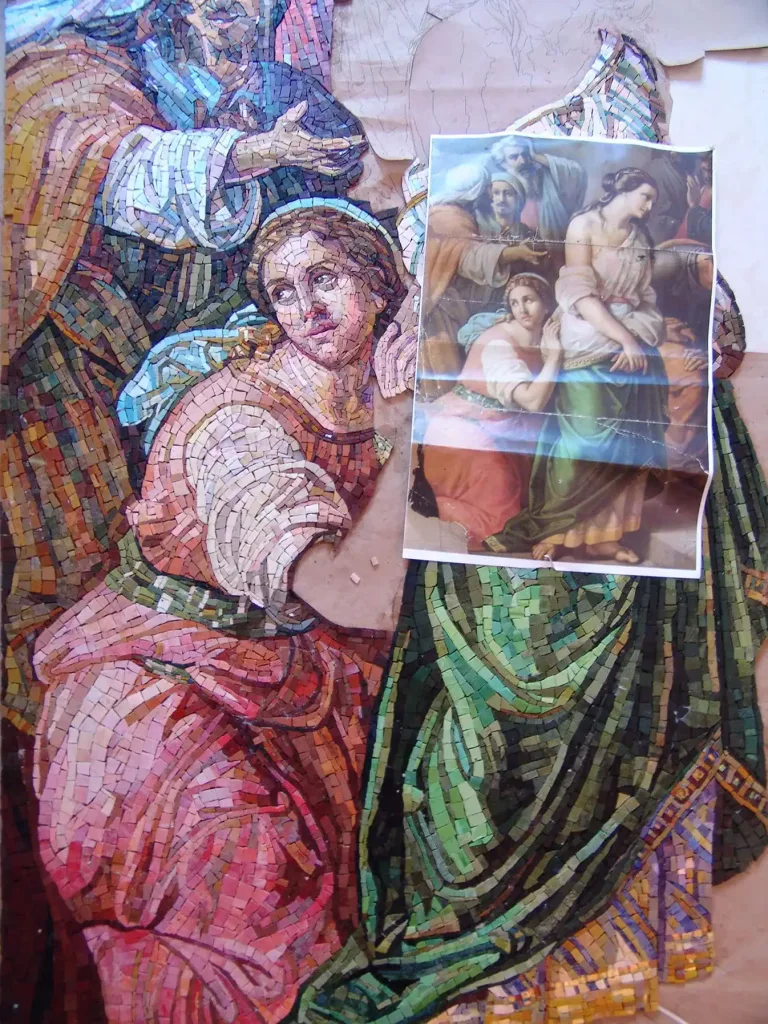
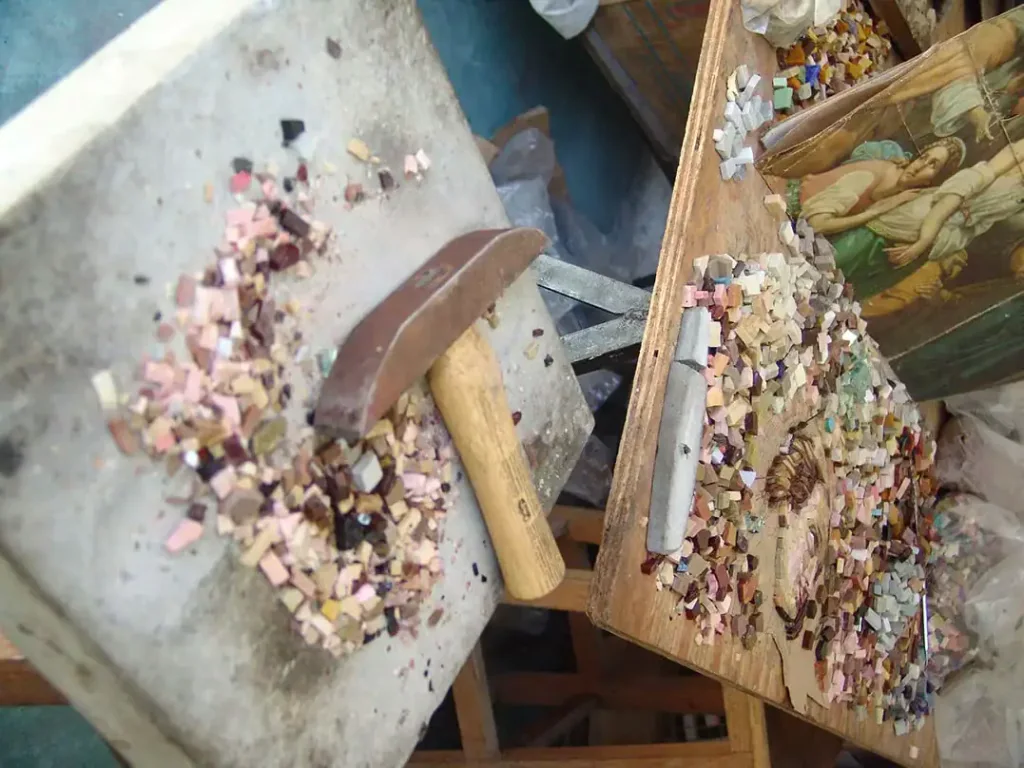
The mosaic was built face-up on the bench, working from a printed reference laid alongside the panel. The glass is sorted by tone before cutting, so the transitions across a cheek or a fold of cloth can be chosen piece by piece rather than mixed on the fly.
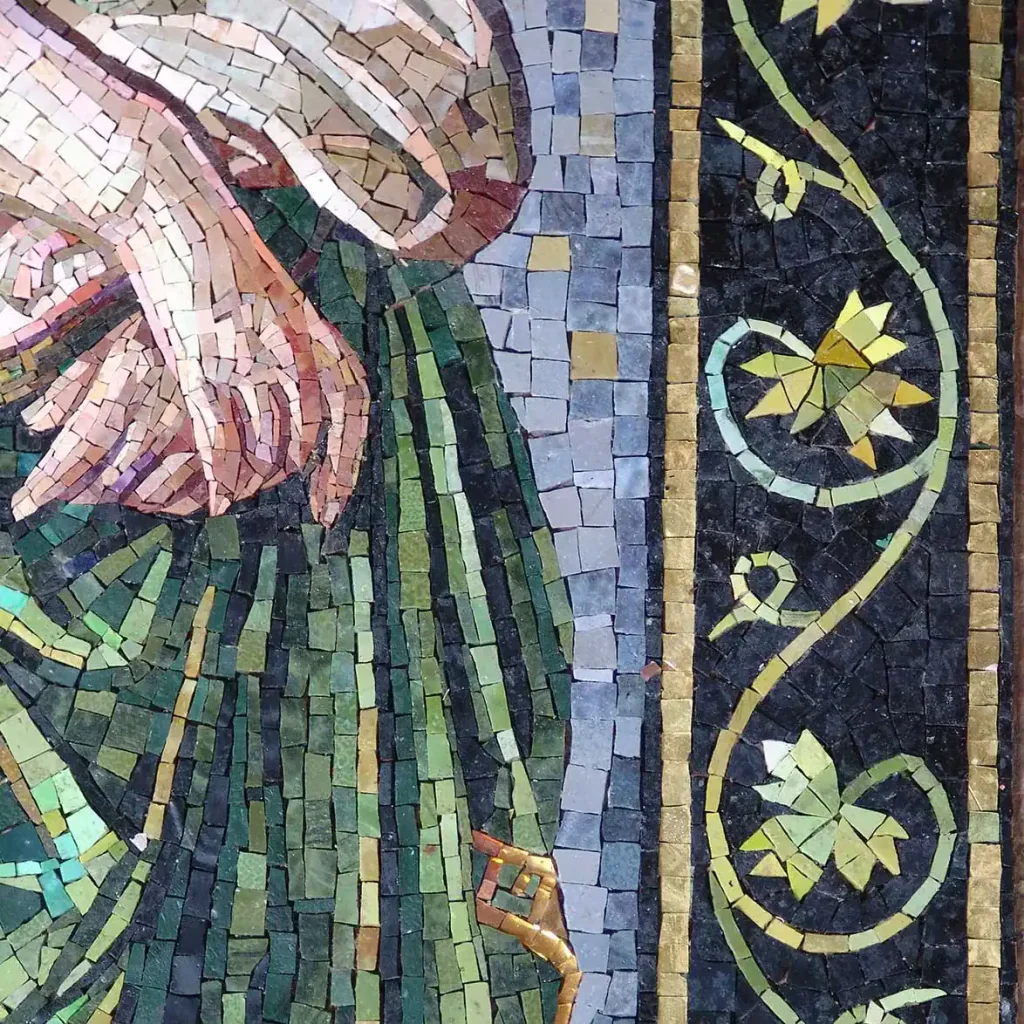
Tesserae are cut with a hammer and hardie and set following the contours of the figure — opus vermiculatum, the Byzantine method for figurative work. Gold leaf tesserae carry the light in the halo and the inscription.
What a commission looks like
Commissions are photographed as they go. You see the drawing, the first sections set, the face as it takes shape, and the finished panel before it leaves the studio — which is what the sequence above shows, start to finish.
That is what to expect from a commission here: updates through the build, and a say in the composition before any glass is cut.
Commissioning a religious mosaic
The tradition reaches back to the earliest Christian basilicas, where Byzantine artisans used gold and colored smalti to make devotional images meant to last for centuries. We work in the same materials and many of the same techniques — hand-cut smalti, opus vermiculatum figure outlining, gold leaf tesserae for halos and light. For historical context, see Byzantine art at the Met.
A commission begins with a conversation about the subject, the iconographic tradition, and where the piece will go. We develop a composition that fits its architectural setting — an interior wall, an entry, a niche — and you approve the design before fabrication starts. The finished mosaic ships paper-faced in numbered sections, ready for your own tile contractor to set.
See more figurative work in the mosaic artwork gallery.
Begin your commission
Send the details of your project, or call (323) 389-5347. Studio hours are Monday to Friday, 9am to 5pm, and Saturday, 9am to 1pm, Pacific.