Transform Your Swimming Pool.
Turtles, and why they work underwater
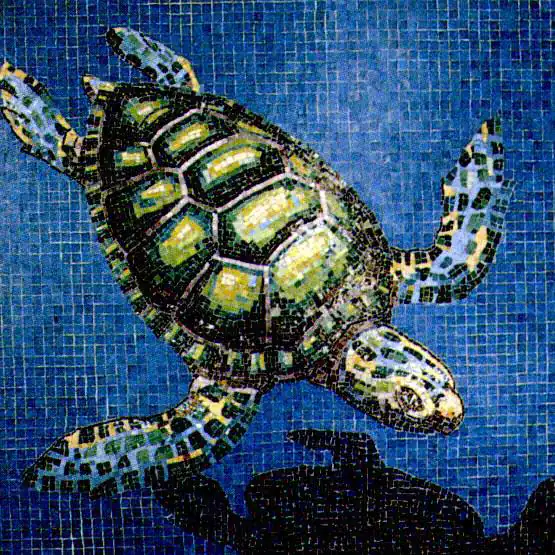
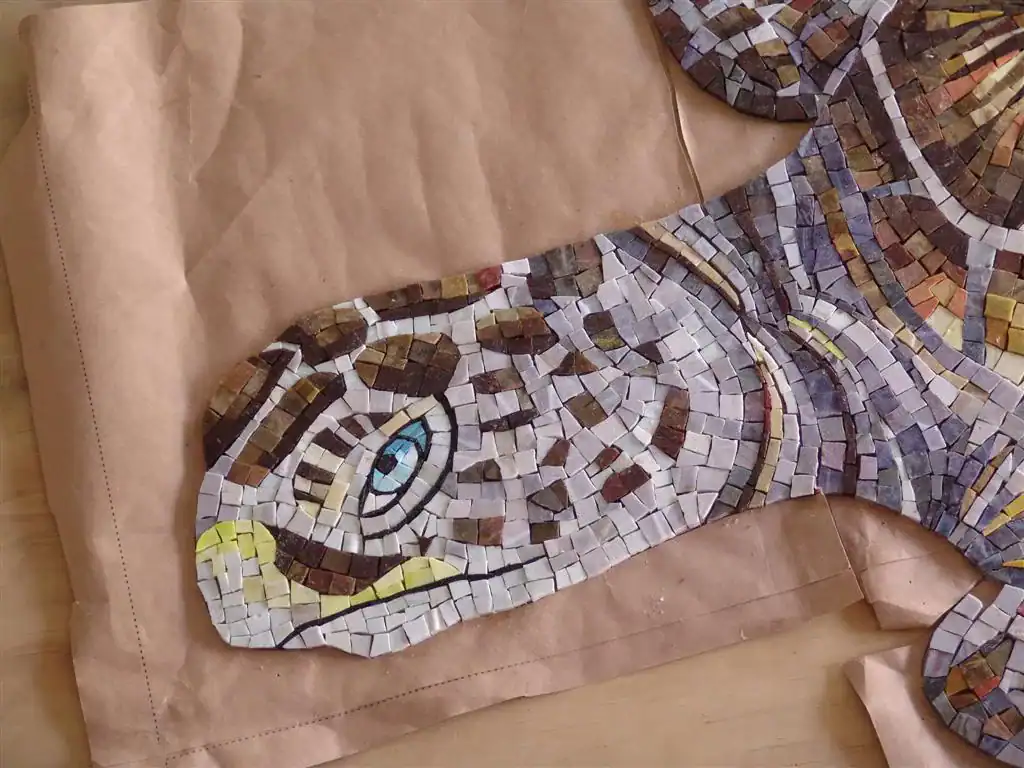
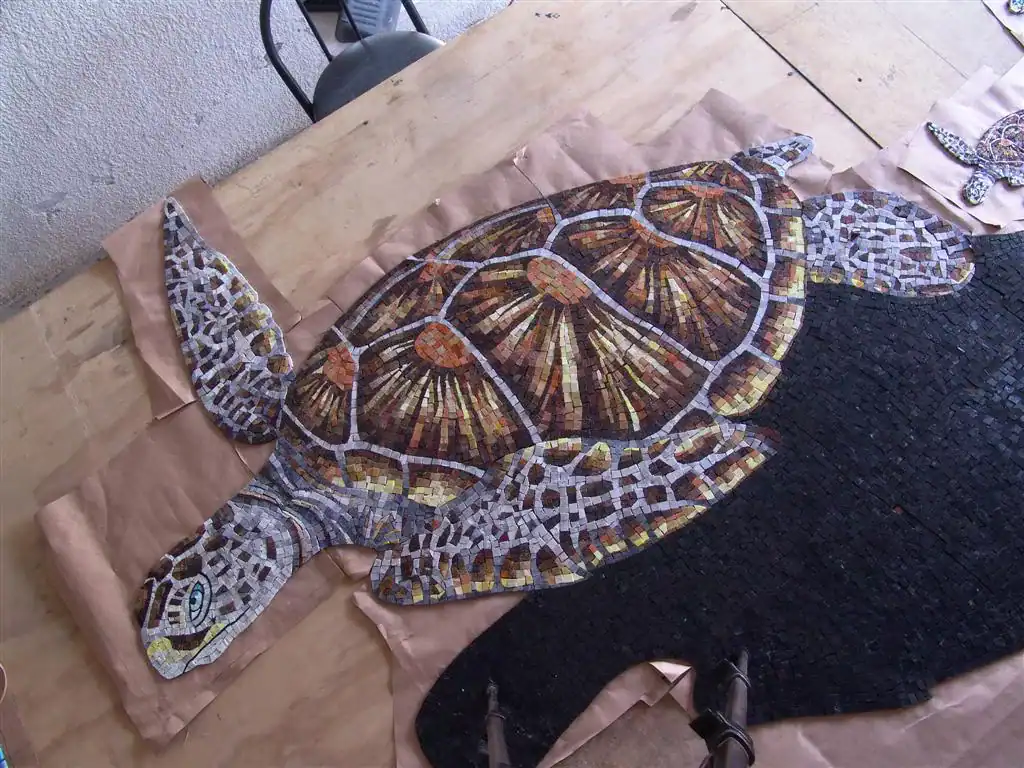
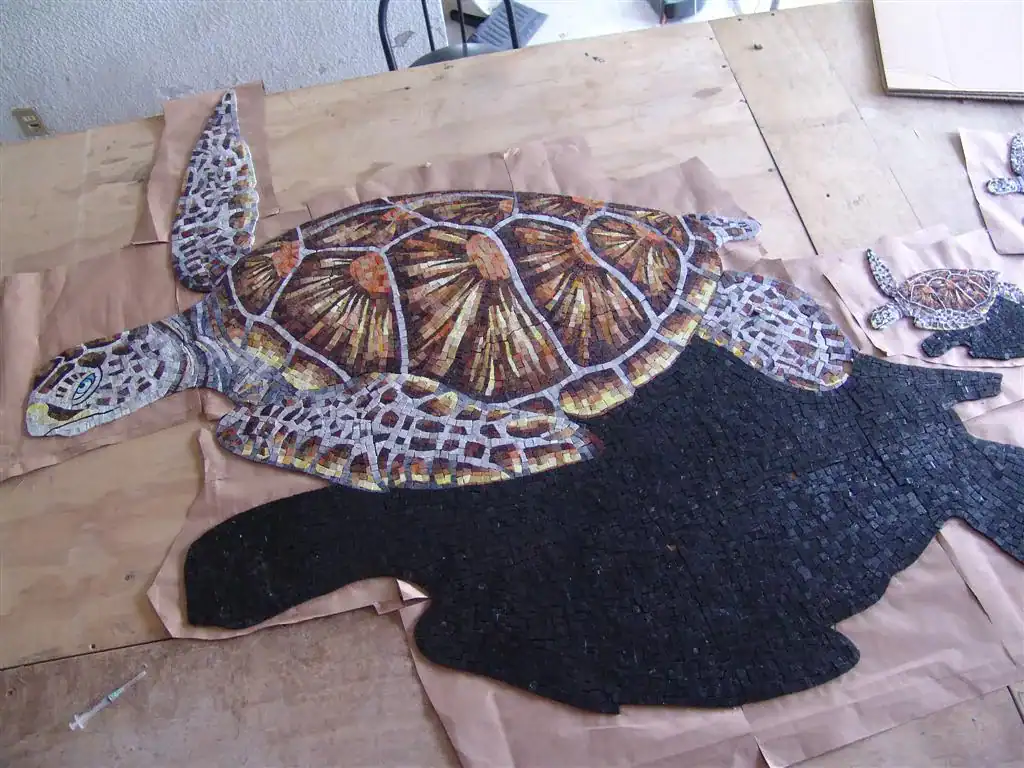
A sea turtle is one of the few subjects that genuinely improves under moving water. The shell breaks into panels that catch light at different angles, and the flippers carry the eye across the floor. It is a shape that reads from the deck, from the water, and from a second-floor window — which is not true of most pool art.
We have been making custom mosaics since 1998. Recent work includes the mural at San Diego International Airport and private estates in Texas and Arizona.
What you actually receive
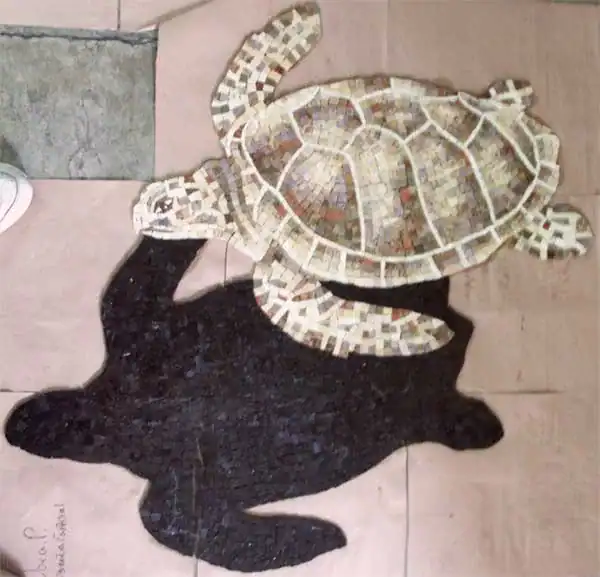
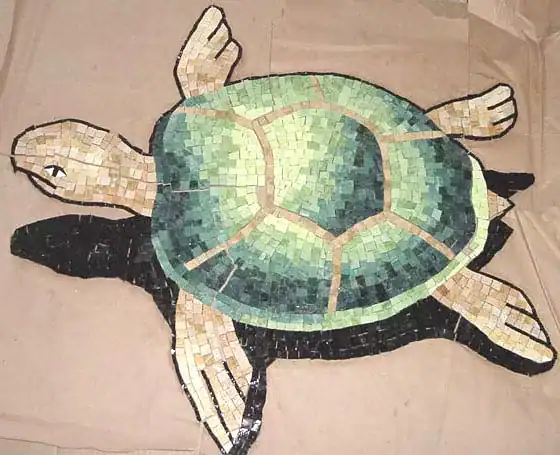
Your mosaic arrives paper-faced, in numbered sections, with a setting drawing showing the order they go down. Your own tile contractor sets it. We do not install — the work is fabricated in our own studio and shipped nationwide.
That is the part most people get wrong when they price this against a stock tile mural. You are buying a finished piece of artwork, cut and laid up before it ever reaches your site.
Designs
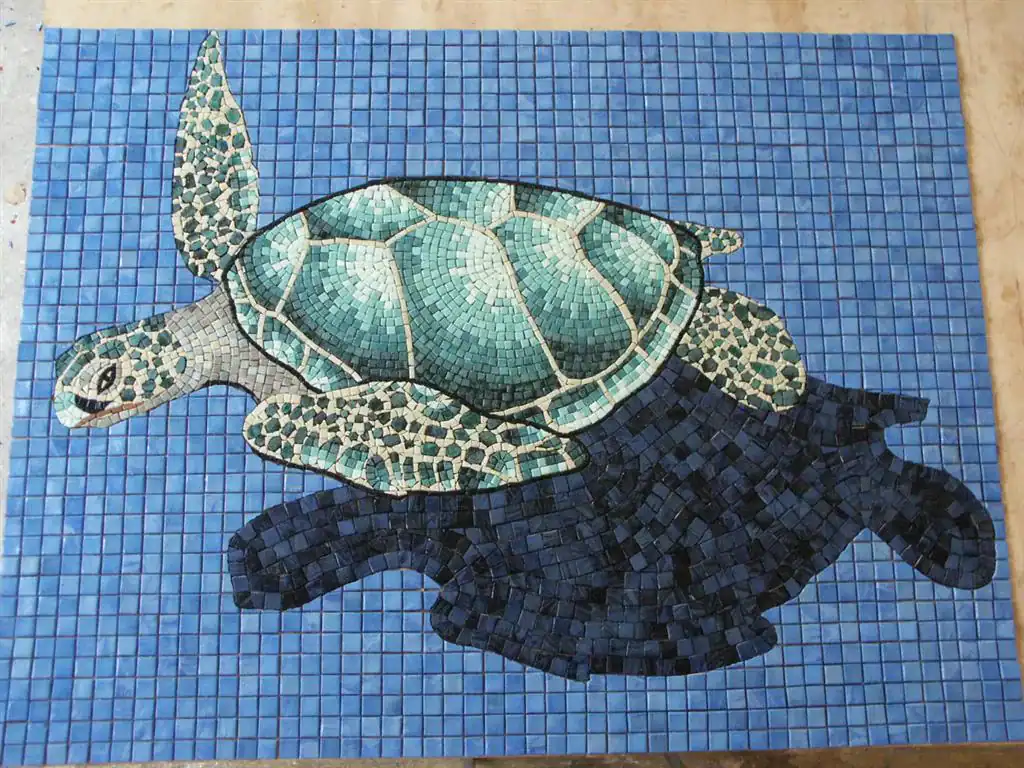
There is no catalog to pick from. Every turtle is drawn for the pool it is going into — green, loggerhead, hawksbill, a group of hatchlings, or a single animal at scale across a deep end. Send a photograph or a sketch and we will draw it against your dimensions.
We work in hand-cut smalti, glass and marble, and in all-tile designs built from whole square tiles laid to a grid — no cutting, a different look, and a lower cost.

Where the turtle goes
This is worth getting right before anything is cut.
Place the turtle toward the deep end and angle the head toward deeper water. Moving water then reads as the animal swimming rather than sitting. A turtle centered on a flat shallow floor looks like a decal; the same turtle set on the slope looks alive.
We mark the position on the setting drawing, but your pool builder should see it before the shell is plastered.
What your contractor needs to know
Frequently Asked Questions
Common questions
Do you install the mosaic?
No. We fabricate it; your tile contractor sets it. It ships paper-faced in numbered sections with a setting drawing showing the order they go down. Most pool builders and tile setters have done this before — and if yours has not, the drawing is written for them.
Can you work from a photograph or a drawing?
Yes. Send an image, a sketch, or just a description along with the pool dimensions. We draw the turtle against your actual measurements and send it back for approval before anything is cut.
Hand-cut or all-tile — what is the difference?
Hand-cut work shapes every piece to the drawing, in smalti, glass or marble. All-tile work is built from whole square tiles laid to a grid, with no cutting — a different look, and a lower cost. A turtle works either way: a curved shell reads beautifully hand-cut, while all-tile keeps the cost down across a large floor.
Will it work in my pool?
The pool needs a concrete shell — gunite or shotcrete. The mosaic is set into the surface as it is finished, so the timing matters: it goes in with the plaster, not after it. The Ceramic Tile Institute of America publishes field guidance on setting glass tile.
What does a turtle mosaic cost?
It depends on the size, the method and how much detail the drawing carries. We publish real numbers and worked examples rather than a vague range — see what a custom pool mosaic costs. The budget selector below will also get you a straight answer quickly.
How long does it take?
Three to six weeks for smaller pieces and six to sixteen for larger ones, depending on the size of the piece and how much hand-cutting the design carries. If you have a plaster date to hit, tell us early — that is the date everything else works back from.
Where do you ship?
Nationwide, and to the Caribbean. Recent work has shipped to California, Texas, New York and Florida.
Are they safe for children and pets?
Yes. The mosaic is set flush into the pool surface and grouted, so there is no edge or lip to catch a foot. Underfoot it is the same surface as the rest of the pool.
Begin your commission
Send the details of your project, or call (323) 389-5347. Studio hours are Monday to Friday, 9am to 5pm, and Saturday, 9am to 1pm, Pacific.